EVERYDAY & HOME
Most problems are preventable
Opportunistic theft is the main everyday concern: unattended bags, valuables left in cars and poorly secured rentals.
WHAT TO DO Lock doors and windows, keep valuables out of sight, and avoid isolated beaches or poorly lit streets alone at night.
SEA & REEFS
The lagoon is calm — not risk-free
Currents, swell and shallow coral can change by beach and weather. Sea urchins, jellyfish and stonefish are uncommon but possible.
WHAT TO DO Ask locally before swimming, wear reef shoes, never swim alone, and seek urgent care after a suspected stonefish sting.
WILDLIFE & INSECTS
Mosquitoes matter more than predators
There are no large dangerous land animals to plan daily life around. Mosquito-borne dengue and chikungunya are the more practical concern.
WHAT TO DO Use repellent and screens, remove standing water, do not feed macaques, and seek medical advice for persistent fever.
ROADS & SEVERE WEATHER
Slow down before conditions force you to
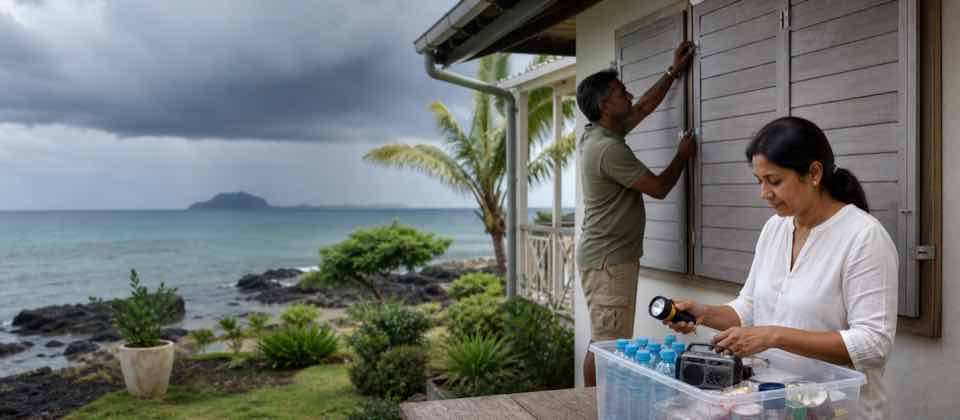
Roads can be narrow, dark and shared with pedestrians, cyclists and motorbikes. Heavy rain and cyclones can bring flooding, strong winds and closures.
WHAT TO DO Avoid unfamiliar roads at night, never drink and drive, and follow official warnings. During a Class III or IV warning, stay in a safe shelter and follow the authorities’ instructions.

SAVE THIS CHECKLIST
A safety plan you can actually use
- 01
Save police, ambulance and Coast Guard numbers
- 02
Lock accommodation, car and valuables
- 03
Check sea and weather conditions before activities
- 04
Use licensed water-sports operators
- 05
Prepare water, medicines, torch and charged phones
Compare areas for everyday convenience
Explore transport, clinics, beaches, lighting context and essential services on the map.